

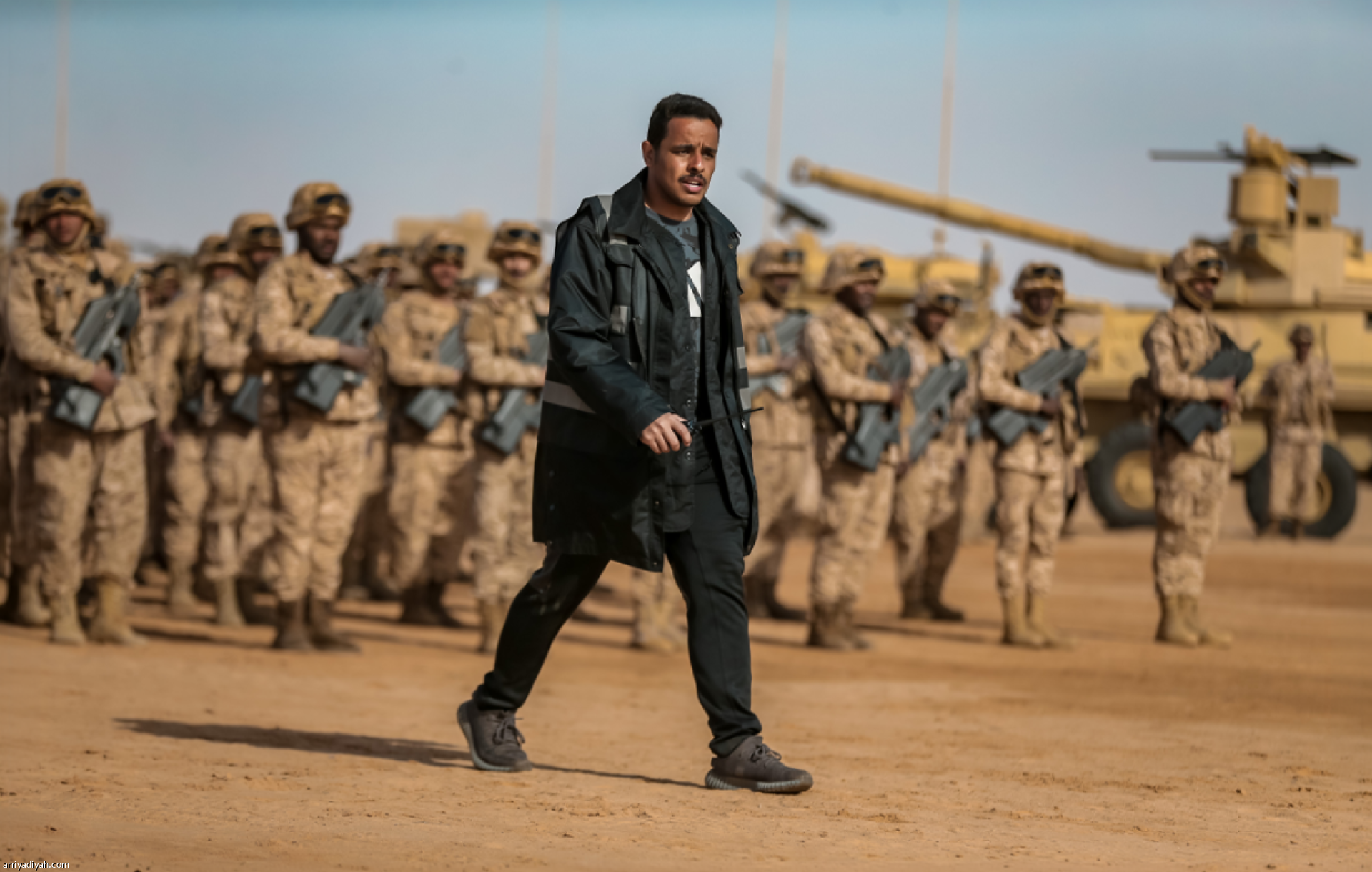
Director Hussam Al-Zahrani, in an interview with Al-Riyadiyah newspaper, discussed his experience in directing, his ambitions, and his view of the future of cinema in Saudi Arabia. He has spent about 18 years in the field, during which he directed nearly 22 works.
Beginnings with His Father's Camera
Al-Zahrani's relationship with the image began in childhood with his father's camera. He worked in photography, writing, and editing before devoting himself to directing. During his secondary school years, he worked as a photographer at a Jeddah channel.
His first short film, made at school, was titled "Don't Crawl" and followed students who run away and steal a car. He said he knew he wanted to become a director the day the film was screened, when the students applauded and looked for him.
Directing Works and Experiences
He has directed nearly 22 works, most notably the short films "Sahm Muezzi," "Ashara Wahid" ("Ten to One"), and "Hizam" ("Belt"), in addition to documentaries, advertisements, and films linked to the National Guard. He noted that short films run between 10 and 15 minutes and have limited scripts.
In "Ten to One," he started from the scene "Please, Awadha" and built the story around it. As for "Hizam," it was a script by a writer that he adapted for directing.
Filming Live-Ammunition Scenes
He said the most difficult moments were in live-ammunition scenes, where he moves away from the camera and cannot see the image directly. For this reason, he relies on his experience as a cinematographer and his intuition to choose the frame in advance.
Regarding the National Guard, he said National Day is the most suitable time to screen these films, but their stories are relevant at any time, as they tell the stories of real men, some of whom were martyred. He pointed out that he has other works that were shown at different times and on different platforms, such as "Shahid."
Saudi Cinema and Future Ambitions
Al-Zahrani said the Saudi film scene is still taking shape, with directors exploring new areas. He explained that the problem lies in the scarcity of opportunities, and that some of them sometimes go to directors from abroad, while the Saudi director needs a chance to make his first film, and wants the Saudi story to be told through a Saudi eye.
He expressed his expectation of great development as options expand, and his aspiration toward musical films and true biographies. He said he is currently working on a true story and hopes the path for story rights becomes clearer. He is also preparing a project outside the military framework, and always begins by sitting with the people behind true stories to draw out their details, and he tends toward stories that people know or that touch their lives.
On the greatest challenge he has faced, he said it was convincing the producer that the story deserved a film and that he was the right director for it, which pushed him to scrutinize project preparation more closely. He believes opportunities will expand as the industry matures, and that he continues to strive to be ready.
Source: Arriyadiyah newspaper
Comments (0)