

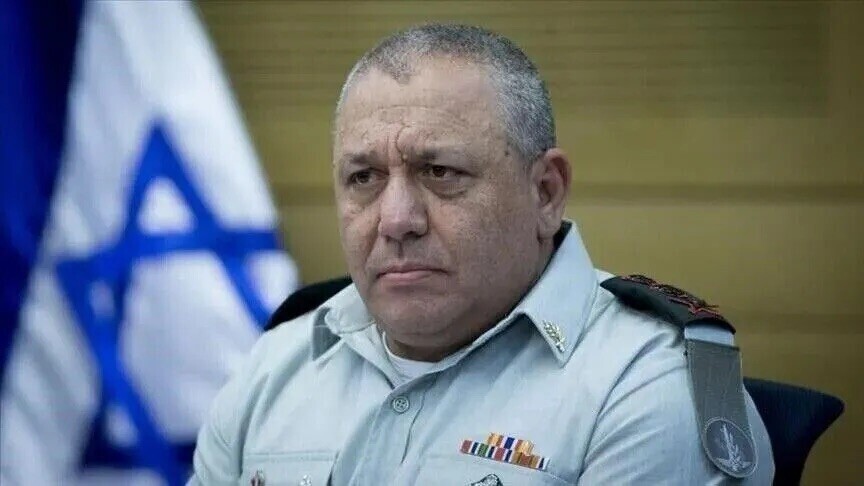
The race for the top spot in the Israeli Knesset election results has opened up a rift within the camp opposing current Prime Minister Benjamin Netanyahu, between Gadi Eisenkot鈥檚 bet that his party, Yesh Atid, will become the largest to enhance his chances of being tasked with forming the government, and warnings from his allies that this endeavor may strengthen his party at the expense of the majority needed to govern.
Opinion polls indicate that Yesh Atid, which is participating in the elections for the first time, is leading Likud, led by Netanyahu, by two or more seats, and that Eisenkot is ahead in the question of who is most suitable for the premiership. Eisenkot told local radio station 103 FM on Tuesday: "All opinion polls point to a fierce competition with the Likud party, so I am working to ensure that Yesh Atid becomes much larger than Likud."
For his part, Opposition Leader Yair Lapid warned in an interview with Yediot Ahronot on Tuesday that the "largest party" strategy could cost his camp the election. Lapid added: "When was the only time we achieved victory? When we adopted the coalition strategy; at that time, Netanyahu鈥檚 party was the largest, yet we managed to form the government."
Former Prime Minister Naftali Bennett pointed out that priority lies with the size of the coalition, stating that he met with his partners at Lapid鈥檚 home three weeks ago, and they concluded that focusing on possessing a large party leads to counterproductive results. He clarified that his strategy targets attracting votes from the camp of National Security Minister Itamar Ben-Gvir and from the Likud party.
In the same context, Netanyahu called on right-wing supporters not to vote heavily for the far-right Jewish Power party led by Ben-Gvir, and also pressured small right-wing parties to withdraw from the race. Yediot Ahronot quoted Netanyahu as saying: "If we do not become the largest party in Israel, it will be a huge disaster, because the President will be able to task Eisenkot with forming the government."
According to Israeli law, there is no special status for the largest party; it is not the size of the party that determines the outcome, but the size of the coalition. After the official results are announced, President Isaac Herzog will meet with representatives of the winning parties, each separately, to listen to their recommendations regarding the candidate to form the government.
If the candidate fails within the specified deadline, another candidate will be tasked, and the inability to form a government may lead to new elections. The Israeli Prime Minister is not directly elected; governments are usually formed from coalitions comprising large and small parties, as no single party individually obtains the required majority.
Source: Anadolu Agency
Comments (0)