

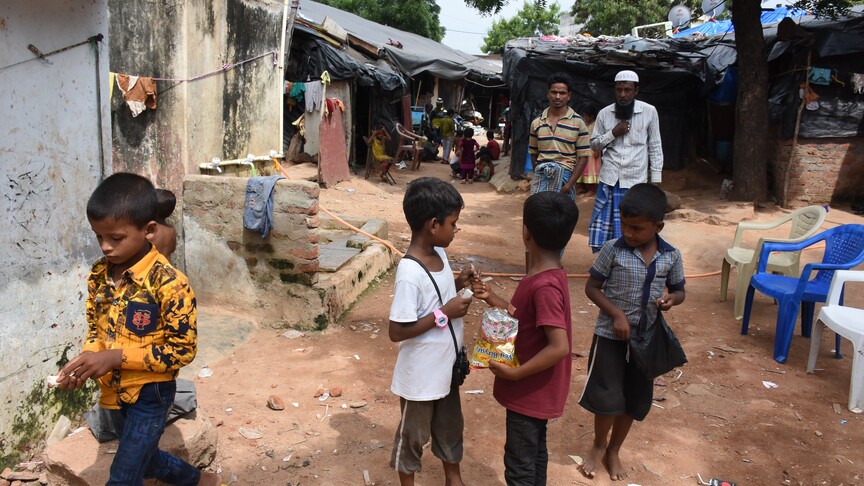
The European Union demanded that Myanmar fully and immediately implement the ruling of the International Court of Justice, which found that it committed genocide against the Muslims of Arakan, the "Rohingya". The EU's External Action Service said in a statement issued on Thursday that the Union reaffirms its continued commitment to combating impunity around the world.
The European Union's position
The statement noted that the Rohingya have suffered immense pain, including violence and displacement, adding: "The suffering of the Rohingya people must not be forgotten. This historic ruling underscores the need to achieve justice for the victims and to uphold international law."
It recalled that it has consistently stressed the need to hold those responsible for the crimes committed against the Muslims of Arakan to account, considering accountability an essential element for reaching a lasting solution to the crisis and ensuring regional stability.
It demanded that Myanmar implement the ruling in full without delay, including removing the effects of the harm it caused and paying compensation for damage that cannot be repaired by restoring the situation to its previous state. The statement stressed that "compliance with the rulings of the International Court of Justice is not optional, but an obligation under international law."
Details of the ruling
On Thursday, the International Court of Justice, in the case brought by Gambia against Myanmar for violating the Convention on the Prevention of the Crime of Genocide, ruled that Myanmar committed genocide against the Muslims of Arakan. The ruling addressed the operations of Myanmar's army against the Rohingya during 2016 and 2017, and it is a final ruling that cannot be appealed.
This is the first time in the court's history that it has held a state responsible for committing the crime of genocide.
Background of the case
In August 2017, Myanmar's army launched "clearance operations" in the north of Arakan State, which drove hundreds of thousands of Rohingya to seek refuge in Bangladesh, following attacks that involved massacres, rapes and the burning of villages. Gambia filed the case before the International Court of Justice on 11 November 2019, accusing Myanmar of violating the Convention on the Prevention and Punishment of the Crime of Genocide.
The ruling comes as the court is considering a case brought by South Africa against Israel on 29 December 2023, in which it accused Israel of violating the Genocide Convention in the Gaza Strip.
Source: Anadolu Agency
Comments (0)