

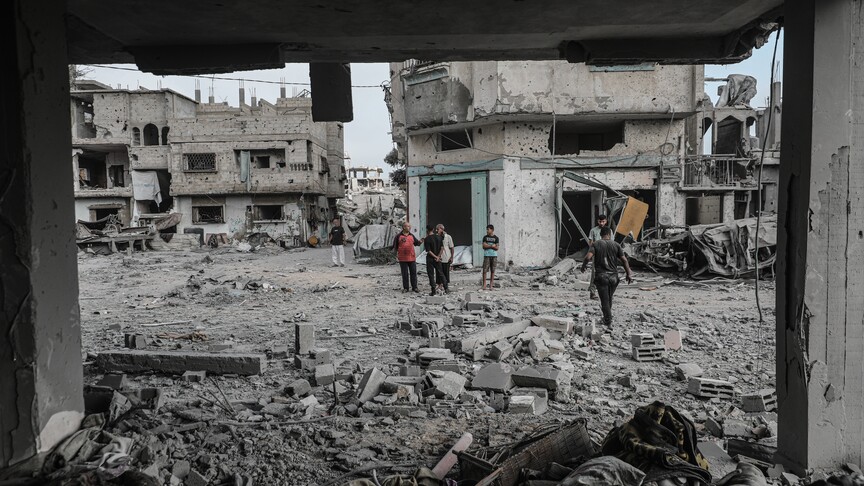
Palestinian Minister of Social Development, Samah Hamad, announced on Sunday that the Gaza Strip needs 200,000 tents to face the fourth winter since the start of the Israeli genocide, given the deterioration of current tents and their inability to protect against the cold. Hamad confirmed, in statements relayed by Palestine Voice Radio, that there is great difficulty in providing tents to the sector due to Israeli restrictions that prevent the entry of the required quantities.
The minister added that what has entered the sector does not exceed a few dozen tents, which is far less than the actual required number. She pointed out that all tents in Gaza are worn out and torn and do not protect families from the cold, explaining that the ministry had previously focused its efforts on providing reinforced plastic awnings. She also noted that Palestinians recycle iron from the rubble of destroyed homes to reinforce tents, describing this as "creativity."
For his part, the UN Office for the Coordination of Humanitarian Affairs (OCHA) stated on October 26 that the humanitarian situation in Gaza is "catastrophic," with most of the population living in dilapidated tents and temporary shelters. It clarified that families are facing harsh conditions regarding water, hygiene, and sanitation, amidst widespread destruction and shortages of basic supplies.
In this context, the minister spoke about the difficult food conditions due to the reduction of assistance by UN organizations, led by the World Food Programme (WFP). She noted that the ministry held discussions with UN parties regarding the provision of electronic cash support, pointing to rising food prices in markets. The Euro-Mediterranean Human Rights Monitor warned on October 22 of the recurrence of the famine risk due to the shortage of flour and the closure of bakeries.
The World Food Programme also announced on October 19 a reduction in its assistance, leading to a decrease in the number of beneficiaries from 1.6 million to 1.1 million Palestinians. The program cut food rations in half, and the number of daily hot meals dropped from 250,000 to 150,000. The program warned that approximately 1.4 million Palestinians face acute food insecurity. The war, which began on October 8, 2023, has resulted in more than 74,000 deaths and over 175,000 injuries, and caused massive destruction affecting 90 percent of civil infrastructure.
Source: Anadolu Agency
Comments (0)