

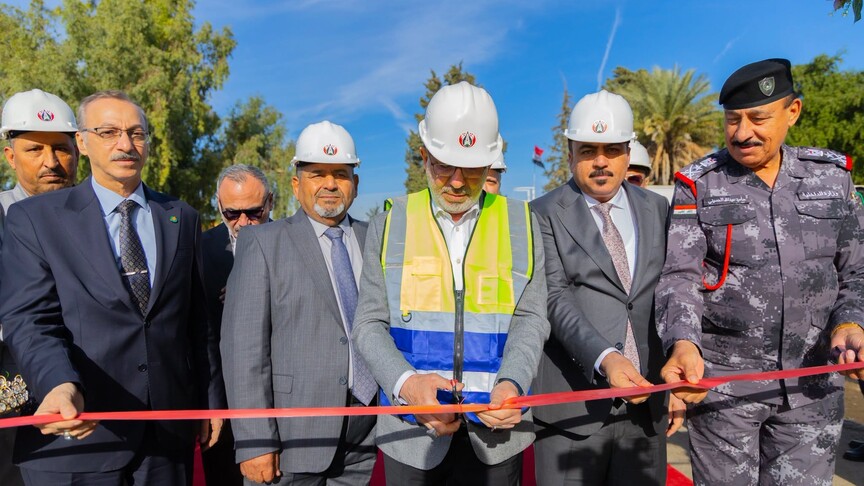
Pipeline Restart at Initial Capacity
Iraqi Oil Minister Basim Khudair announced on Friday the restart of the old pipeline in Kirkuk Governorate to export oil to Turkey, after it had been halted for 12 years. He made the announcement during a visit to Kirkuk in northern Iraq to inaugurate the "IT1" oil pumping station, according to a ministry statement carried by the Iraqi News Agency (WAA).
The ministry said the restart of the route will allow the export of 300,000 barrels of oil per day in the first phase.
Plan to Raise Export Capacity
It added that the plan includes raising export capacity to 500,000 barrels per day after the rehabilitation of the second pumping station is completed. It noted that restarting the oil route is an important step toward strengthening Iraq's export capabilities and diversifying crude export outlets to global markets, as well as reviving one of the country's vital oil arteries.
Proposal to Extend Pipeline to Kuwait
On Thursday, Turkish Energy and Natural Resources Minister Alparslan Bayraktar unveiled a proposal to extend the Kirkuk-Ceyhan oil pipeline from Kirkuk to Basra and then to Kuwait. He said Kuwaiti Crown Prince Sabah Khaled Al-Hamad Al-Sabah had expressed interest in the proposal, which would provide an alternative export route away from the Strait of Hormuz.
Bayraktar explained that the Turkish Petroleum Corporation holds stakes in three oil fields in the Iraqi Basra region and participates in oil and natural gas projects in Kirkuk and Azerbaijan.
Measures Against Smuggling
Iraq's announcement on the restart of the oil pipeline follows government measures to combat oil smuggling and tighten control over border crossings. On Tuesday, Iraqi Prime Minister Ali Falih al-Zaidi ordered the dismissal and removal of eight officials and the closure of unofficial border crossings, after reviewing the report of an investigative committee on oil smuggling at the state-owned North Oil Company.
On Thursday, the Iraqi Border Forces Command announced the start of implementing al-Zaidi's directives to close all unofficial crossings with neighboring countries, including those in the Kurdistan Region in northern the country. Smuggling of crude oil and its derivatives is one of the most prominent security and economic challenges facing Iraq, the second-largest oil producer in the Organization of the Petroleum Exporting Countries (OPEC).
Source: Anadolu Agency
Comments (0)