

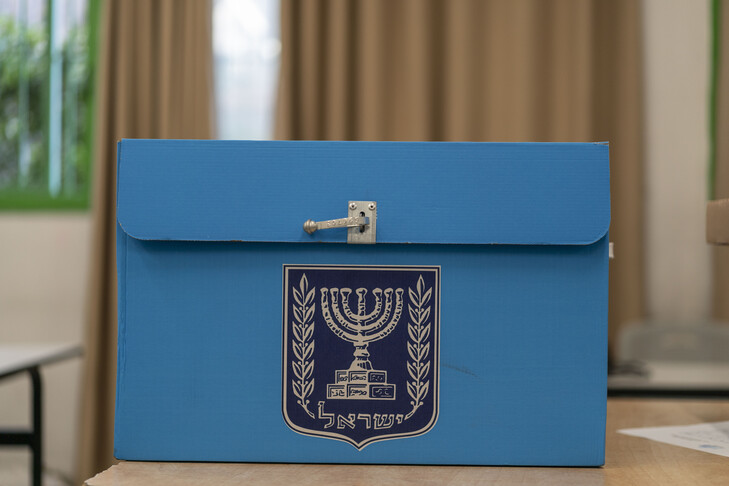
Israelis head to polling stations today, Tuesday, to elect Knesset members, in elections described by candidates from the government and opposition as among the "most important milestones" in Israel's history. The elections hold special significance for the future of Prime Minister Benjamin Netanyahu, as well as for far-right parties, notably "Jewish Power" led by Itamar Ben Gvir and "Religious Zionism" headed by Bezalel Smotrich.
In contrast, the opposition, led by former Chief of Staff and leader of the "Yesh Atid" party Gadi Eisenkot, hopes to form an alternative government that ends Netanyahu and his coalition's nearly 17-year rule. However, opinion polls suggest that neither Netanyahu's nor Eisenkot's camps may be able to reach the majority required to form a government with at least 61 out of 120 seats.
Voting System and Representation
Israel employs a proportional representation system with party lists, considering the entire country as a single electoral district, unlike systems that divide the state into geographic constituencies. This means that the number of seats each list wins is generally proportional to its share of valid votes. However, entering parliament is conditional on surpassing the "threshold" of 3.25 percent of valid votes.
The number of eligible voters is approximately 7.3 million out of Israel's total population of over 10 million. According to the Israeli Central Bureau of Statistics, Jews make up 77 percent of eligible voters, Palestinians 18 percent, while other groups, including Christians, account for about 5 percent.
Government Formation Mechanism
After the elections, the President of the State entrusts a Knesset member with forming the government, and this individual needs to muster a majority of 61 members to gain confidence. The entrusted person does not necessarily have to be the leader of the largest party, but rather the figure believed to have the best chance of assembling a parliamentary majority. Parties joining the government conclude coalition agreements that include the distribution of ministries and the principles and policies the coalition will adopt.
It was noted that all Israeli governments to date have been formed as coalitions, and the Prime Minister has not always belonged to the largest bloc within the coalition, as happened when Naftali Bennett served as Prime Minister between 2021 and 2022, despite his parliamentary bloc comprising only 7 members, within a coalition agreement with other parties.
Source: Anadolu Agency
Comments (0)