

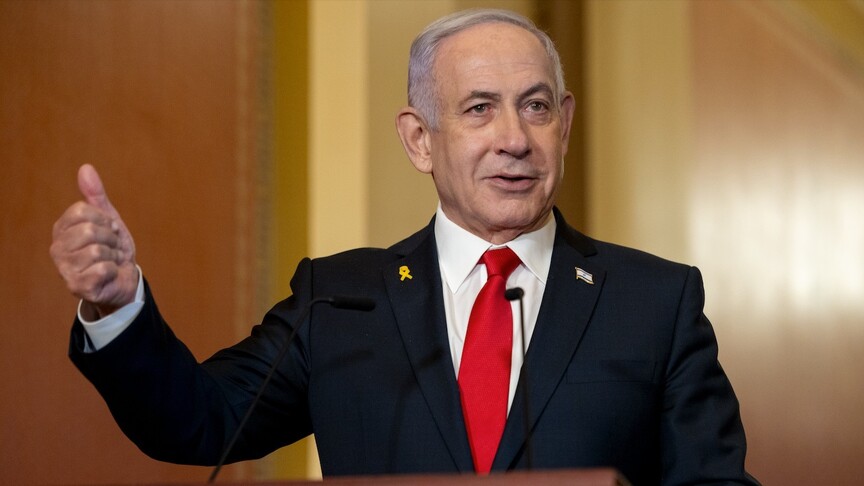
A television investigation aired by the Israeli public broadcaster on Wednesday evening revealed that caretaker Prime Minister Benjamin Netanyahu and his Likud party prepared, ahead of the elections, a plan to accuse Palestinian citizens of manipulating the results.
The investigation said the plan was prepared in an organized manner, starting from Netanyahu's office and extending to thousands of representatives whom Likud deployed at polling stations.
Background to the Elections and Their Results
The parliamentary elections were held on October 27, and Netanyahu's camp won 53 seats (out of 120), compared with 48 seats for the "Jewish opposition" camp led by Gadi Eisenkot, and 19 seats for the Palestinian parties.
Eisenkot received the backing of more lawmakers than Netanyahu's supporters, and on November 8 he was tasked with forming a new government.
Turnout among Palestinians was 80 percent, while overall turnout was 77.7 percent, the highest since 1999, according to the elections committee. Palestinian citizens make up 21 percent of the more than 10 million people living in Israel, which was established in 1948 on occupied Palestinian land.
Campaign Details and Complaints
The investigation explained that the party prepared for the possibility of losing the elections by launching a campaign that lasted weeks before the vote, aimed at blaming Palestinian voters for that loss. It added that the "Arabs stole the elections" campaign is not the first to target Palestinian citizens.
It went on to say that Likud filed about 1,280 complaints on election day, containing allegations that money and shopping vouchers were offered to Palestinian voters in exchange for voting.
The investigation also presented testimonies from citizens summoned for questioning in the city of Rahat in the Negev (south), over suspicions of influencing the elections and distributing money. One of them said, in testimony shown by the investigation, that police asked him why he wanted to vote for the United Arab List, adding that they told him he was a suspect in distributing money to voters, and he denied any knowledge of those accusations.
Political and Legal Controversy
The accusations of vote buying and election manipulation sparked political and legal controversy in Israel, while the Central Elections Committee has not announced any evidence proving violations that affected the final result.
According to Israeli reports, Netanyahu's office rejected the accusations that officials in it were involved in orchestrating the affair.
Netanyahu is on trial on corruption charges that would require his imprisonment if convicted, and since 2024 he has also been wanted to appear before the International Criminal Court on charges of committing war crimes in the Gaza Strip since 2023.
Source: Anadolu Agency
Comments (0)