

Constitution and the Path to Peace
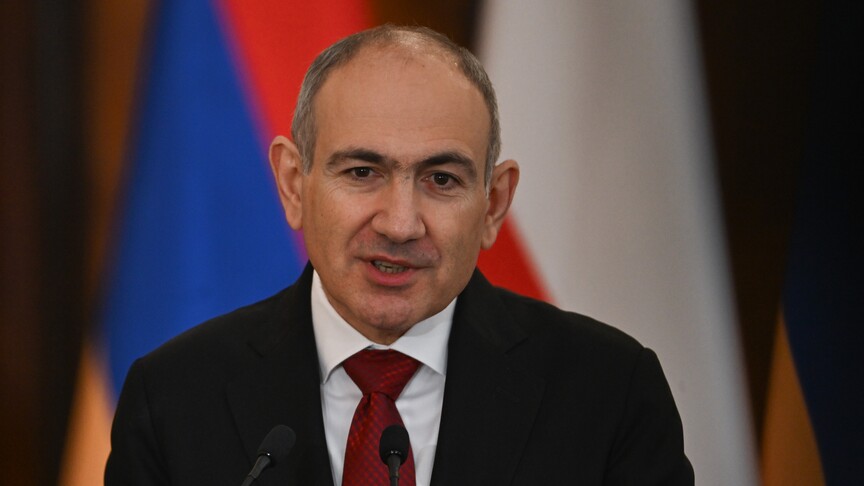
Armenian Prime Minister Nikol Pashinyan said that adopting the new constitution will pave the way for signing and ratifying a peace agreement with Azerbaijan, and establishing a lasting, irreversible peace between the two countries. This came in an address by Pashinyan to the Armenian people after the government published the draft of the new constitution.
Earlier on Monday, the Armenian government published the draft of the new constitution on its official website. The draft omits any reference to the "Declaration of Independence," which includes claims to territories beyond the country's current borders.
Content of the Draft Constitution
Pashinyan explained that the draft does not concern any particular individuals or government; rather, it is based on the sovereignty of the Armenian people over the state, and defines the people as the founder of the state and the source of authority. He pointed out that the purpose of establishing the Republic of Armenia is to guarantee the security, freedom and welfare of the people, preserve their identity, and protect human rights and freedoms.
He stressed that the draft of the new constitution was prepared to achieve these goals, and is not limited to legal arrangements, but presents a new model of the state called the "Fourth Republic." He explained that the basic difference between the "Fourth Republic" and the "Third Republic" lies in the absence of conflict, considering that policies based on conflict weakened Armenia, which is a source of emigration.
He emphasized the need to free the judicial system from the influence of oligarchy (rule by the few), noting that one of the goals of the new constitution is to return judicial power to the people. He pointed out that Article 8 of the draft new constitution makes achieving peace a goal of foreign policy, considering that this means abandoning the logic of conflict contained in the Declaration of Independence issued in 1990.
The Government's Vision for Peace and Independence
He added: "Our goal is to turn Armenia into a crossroads of peace, and to make it a state that has an army capable of protecting its borders and its internationally recognized territory with its own forces."
Pashinyan said that the previous negotiation process over the Karabakh issue and the dispute with Azerbaijan pushed Armenia to the brink of losing its standing as a state. He continued: "After the adoption of the new constitution, we will not only be content with signing and ratifying a peace agreement with Azerbaijan, but we will also achieve a lasting, irreversible institutional peace."
He went on: "This will be a historic and unprecedented situation, because we will possess peace and independence together, and peace and the state at the same time." He considered that peace and statehood were presented in the past as two conflicting choices, while Armenia today faces an opportunity to achieve peace and preserve its independence at the same time.
Opposition and Referendum
Pashinyan accused the opposition of seeking to obstruct this path, calling on it to put the draft new constitution to a popular referendum. He announced that he would resign as prime minister if voters reject the draft constitution in the referendum, stating that if the draft is approved, he will not run for prime minister in the upcoming elections.
In a related context, Pashinyan accused circles that previously held power of "plundering the country" under the slogan of "Greater Armenia."
Background of the Declaration of Independence
On 19 November of this year, Pashinyan said, in a speech during a cabinet meeting, that the phrase "Western Armenia" in his country's Declaration of Independence, issued on 23 August 1990, refers to the eastern regions of Turkey, stressing the need to rewrite the declaration and not to refer to it in the new constitution.
The "Declaration of Independence of Armenia" dates to 23 August 1990. Its preamble is based on a decision issued on 1 December 1989 concerning the unification of Armenia with the Azerbaijani region of Nagorno-Karabakh, while Article 11 refers to what it calls "Western Armenia," in reference to areas located east of Turkey.
Source: Anadolu Agency
Comments (0)