

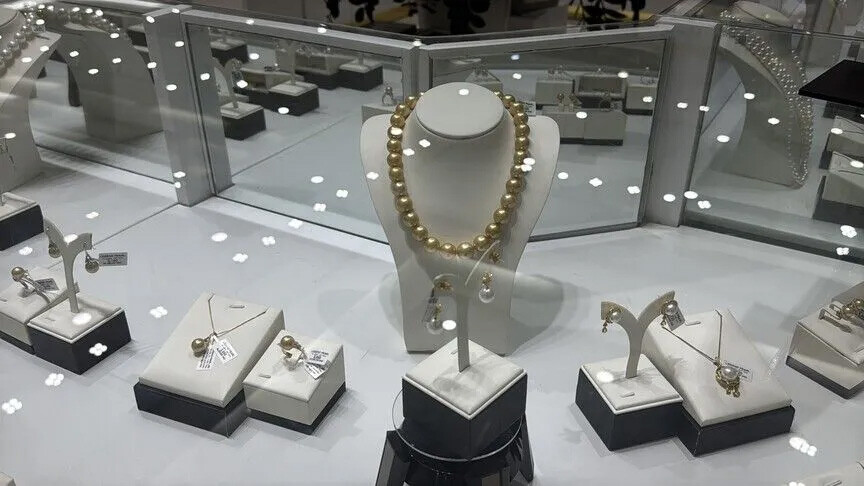
The journey of producing cultured pearls in Ha Long Bay in northern Vietnam takes several years, amid a delicate process whose success rate does not exceed 40 percent and which depends on environmental and biological conditions that control the quality of the final product. The journey begins with a small nucleus placed inside a sea oyster, and the price of the resulting pearl may exceed $5,000.
Prices and Production
Prices of cultured pearls in the bay range from $50 to more than $5,000, as three farms produce up to 300 kilograms annually. After the pearls are extracted, they are assessed against a set of criteria including luster, color, shape, size and surface smoothness. The price of a single pearl suitable for jewelry making starts at around $50 and can exceed $5,000, depending on its quality.
In the same context, the activity of these farms is not limited to selling their products to tourists, but also constitutes a source of exports and job opportunities in the area.
Cultivation Process
Jiang Hong, a guide at the Legend Pearl facility in Ha Long Bay, said pearl cultivation in the area began more than 30 years ago, noting that Japanese experts played an important role in transferring farming techniques to local producers. She added in an interview with Anadolu that workers in the area gained the necessary experience over time and became able to continue production processes on their own.
Jiang Hong explained that pearl cultivation begins by inserting a small round nucleus, made of material extracted from shells, into the oyster. She said: "The nucleus is placed together with a piece of tissue taken from another oyster inside the reproductive organ of the receiving oyster. The nucleus is used to determine the shape of the pearl, while the tissue stimulates the oyster to secrete nacre and form layers surrounding the nucleus."
Jiang Hong pointed out that human intervention at the beginning of the process does not mean the ability to fully control its outcome, as the quality of the pearl is affected by the biological characteristics and genetic makeup of the oyster, as well as water depth and climatic conditions.
Growth Period and Success Rate
The time needed for a pearl to grow varies depending on the type of oyster used. Akoya pearls usually take between one and two years, while South Sea and black pearls need three to five years, according to Jiang Hong. She explained that some cases may require more than five years, noting that the duration of cultivation affects the size of the pearl but is also linked to the biological age of the oyster and its ability to survive.
She pointed out that inserting the nucleus does not guarantee obtaining a pearl, saying the success rate of cultivation in Ha Long Bay ranges between 30 and 40 percent. She added: "Some oysters die after the nucleus is inserted, while other oysters continue to live but reject the nucleus and expel it outward. Thus, the amount of pearls expected to be produced cannot be determined based on the number of oysters into which nuclei were inserted, due to their different responses to the process."
Farms and Markets
Jiang Hong pointed out that the facility that receives visitors is dedicated to introducing the pearl cultivation process, while actual production takes place on three farms inside the bay, each employing around 20 to 30 people, in addition to smaller private farms in the area. She added that the three farms produce between 200 and 300 kilograms of pearls of quality suitable for jewelry making annually, and that their products are exported to the United States and a number of European and Asian countries.
Hong noted that the company does not export its products to Turkey, but it receives a large number of Turkish tourists who buy pearls during their visit to the facility.
Production Challenges
Hong warned of the impact of seawater pollution and climate change on pearl cultivation operations, noting that providing suitable environmental conditions for oyster growth has become more difficult. At the end of her remarks, she pointed out that water cleanliness and temperature are decisive factors in the success of production, concluding: "Maintaining clean water and the appropriate temperature for raising oysters has become more difficult. The harder cultivation becomes, the higher pearl prices rise."
Source: Anadolu Agency
Comments (0)