

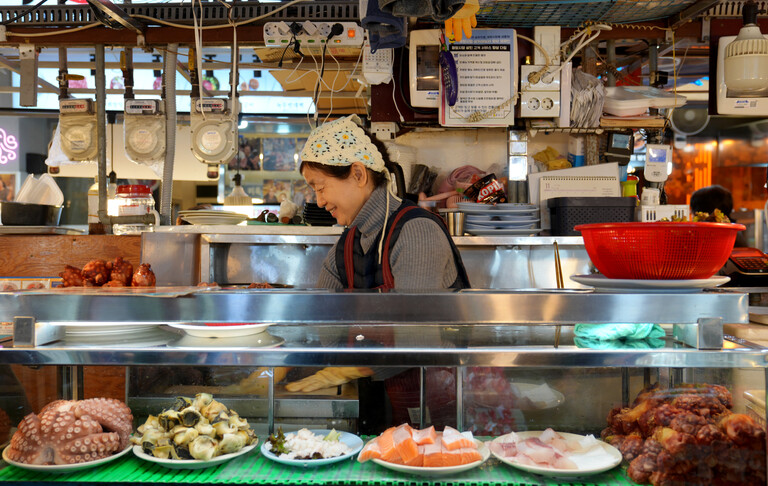
Gwangjang Market, in the heart of the South Korean capital Seoul and dating back to 1905, attracts visitors from around the world to try traditional Korean street food and watch it being prepared live. It all takes place in an atmosphere that preserves cultural features going back more than a century.
Visitors can follow the stages of preparing traditional dishes in an atmosphere that combines the market's long history with everyday life. The market's food ranges from handmade noodles and filled dumplings to spicy rice cakes, along with fried foods and traditional Korean appetizers.
A Historic Market Among Skyscrapers
Amid the skyscrapers that characterize the modern city, the market maintains its historic character, welcoming visitors in long alleys covered by wide transparent roofs, lined on both sides with hundreds of stalls offering a variety of Korean cuisine.
Preparing food in front of visitors is one of the market's main attractions, as they can watch the stages of preparing traditional dishes and taste them directly at the stalls. A number of these stalls are run by Korean women vendors, who have become among the market's most prominent landmarks, and who prepare in front of visitors the traditional handmade "kalguksu" noodle dough and steamed "mandu" dumplings filled with meat and vegetables.
A Variety of Dishes
The market's food ranges from hot dishes to appetizers and fried foods, among the most famous of which is "tteokbokki", pieces of rice cake slowly cooked in a spicy chili sauce. Market-goers also find fish cakes known as "eomuk", made from fresh white fish that is ground and mixed with starch and spices, then fried and served on skewers.
Korean cuisine options also include "japchae", made of starch noodles mixed with fresh vegetables, and "sundae", a traditional dish of steamed stuffed Korean sausage.
The stalls also offer a variety of fried foods and appetizers, such as fried sweet potato slices known as "goguma twigim", seaweed-wrapped noodle rolls known as "gimbap" ("gimari"), and fried meatballs "gogi wanja", along with seasoned vegetables and fermented cabbage pickle known as "kimchi". These foods are served with a variety of spiced sauces, which adds a range of colors and flavors to the stalls.
Constant Activity and Fame Abroad
The market sees constant activity throughout the day, increasing in the evening hours as locals arrive after the working day ends, along with tourists who visit Seoul to discover its landmarks and cultural experiences and want to get to know Korean cuisine.
Long wooden benches line the open stalls, from which cooking steam rises, and visitors sit next to one another in the evening to eat, sharing tables in an atmosphere that allows social interaction among people from different cultures.
The spread of Korean TV series, food documentaries on digital platforms, and posts circulating on social media have helped boost Gwangjang Market's fame outside South Korea. The market has become one of the most prominent destinations for Seoul visitors seeking to discover and experience Korean street food culture first-hand, in a place that combines traditional cuisine with the daily life of the capital's residents.
Source: Anadolu Agency
Comments (0)