

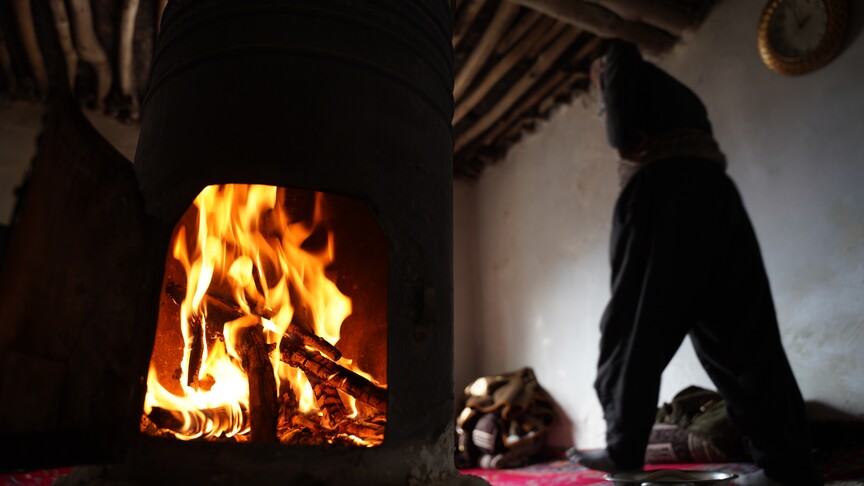
Residents of the village of Wilyer in Sulaymaniyah province, northern Iraq, have returned to wood stoves for warmth as the cold intensifies and heavy snow falls, after the cost of heating homes with kerosene became more than many families can afford.
The villagers gather the wood they need from dead trees, leaving living trees untouched. In other mountain towns, more families have turned to wood heating, boosting the manufacture and sale of traditional stoves.
Residents' Accounts
Nouri Ahmed (77), a resident of Wilyer village in the Tangero sub-district of Sulaymaniyah, told Anadolu that the rising cost of kerosene has pushed residents to use wood stoves. He added: "Oil prices are very high, and we cannot buy kerosene. To meet our fuel needs, we cut only dead trees and use them as firewood, and we never cut living trees."
For his part, Hamrashid Hamsur (80), also a resident of the village, told Anadolu that the villagers work in farming and livestock breeding, and that winter in their area is extremely cold, with heavy snow and rain. Asked about heating costs this season, he said: "If we did not use these dead trees to light the stove, we would have needed five or six barrels of fuel this year, which would mean high costs."
Energy Disruption and Rising Prices
As temperatures drop, families in other areas of the Kurdistan Region in northern Iraq have begun replacing electricity, cooking gas and kerosene with wood, particularly in mountain towns that experience harsh winters.
The return to wood coincides with disruptions in energy supplies, as repeated drone attacks on the Khor Mor gas field have affected electricity production in the region. The war between Iran and the United States and its ongoing repercussions since February 28 have also contributed to higher oil prices, adding to the burden on residents.
A Boom in Stove Manufacturing
In the Chamchamal district of Sulaymaniyah province, Vista Amir Bakr (21), a stove maker, told Anadolu that demand for wood stoves has risen this year with higher fuel prices, after their production was limited in previous years. He explained that a large share of his output is sent to the areas of Hawraman, Jomanm, Qalat Dizah and Pshdar, where winters are bitterly cold.
He estimated that a single home in those areas needs on average between 4 and 5 barrels of fuel over the season. He added: "Residents cannot bear this high cost, so they find themselves forced to use wood stoves." He noted that he makes stoves in various shapes and types according to customers' needs, using high-quality metal sheets that withstand the heat of burning wood.
In the city of Sulaymaniyah, Ayub Bakhtiar (28), also a stove maker, told Anadolu that rising fuel prices have pushed many residents to use wood after they could no longer afford fuel, adding that some families also choose these stoves for their attractive look inside the home.
As demand for stoves grows in Sulaymaniyah's workshops, residents of villages and towns in the province are returning to gathering wood from dead trees to heat their homes throughout the winter.
Source: Anadolu Agency
Comments (0)