

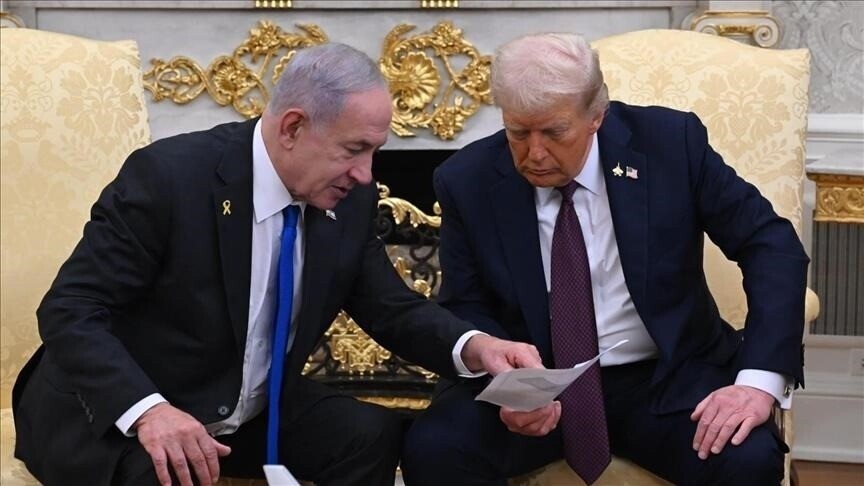
The Israeli newspaper "Yedioth Ahronoth" revealed on Monday that Washington and Tel Aviv are negotiating a new agreement for US military aid to Israel, a move in which Israel seeks to finalize the deal before the new US Congress takes office in January, fearing political obstacles that could affect the continuation of aid.
The Democratic Party took control of the majority in Congress from US President Donald Trump's Republican Party in the midterm elections held on November 3, prompting Israel to accelerate negotiations. The report confirmed that US military aid to Israel will not stop immediately, contrary to previous statements by Trump, as the current agreement will remain valid until 2028.
Details of the new agreement
The value of direct aid is expected to drop by nearly half, by reducing its usual duration from 10 years to 5 years after the current agreement ends in 2028. The current agreement provides Israel with $3.3 billion annually under the "Foreign Military Financing" program, totaling $33 billion, while the anticipated agreement is expected to provide a similar annual level for only 5 years, totaling approximately $16.5 billion, before stopping completely.
Increased defense funding
While direct aid is expected to cease, US funding allocated for joint development of air and missile defense systems is expected to increase from its current level of $500 million annually to an unspecified amount. This amount is designated for joint cooperation in missile defense, including funding research, development, and production of active defense systems such as "Iron Dome," "David's Sling," and "Arrow."
Political motives and Congress's stance
A senior Israeli official, who did not name himself in the newspaper, said that Trump's statements about the end of US military aid to Israel by the end of 2026 were due to reasons related to US domestic politics, as part of an attempt to support Republican candidate Mike Rogers in facing his Democratic opponent, Abdul Rahman Siddiq. The official pointed out that some members of Congress oppose reducing aid for economic reasons, as a large portion of the funds is spent within US states to support defense industry companies.
Source: Anadolu Agency
Comments (0)