

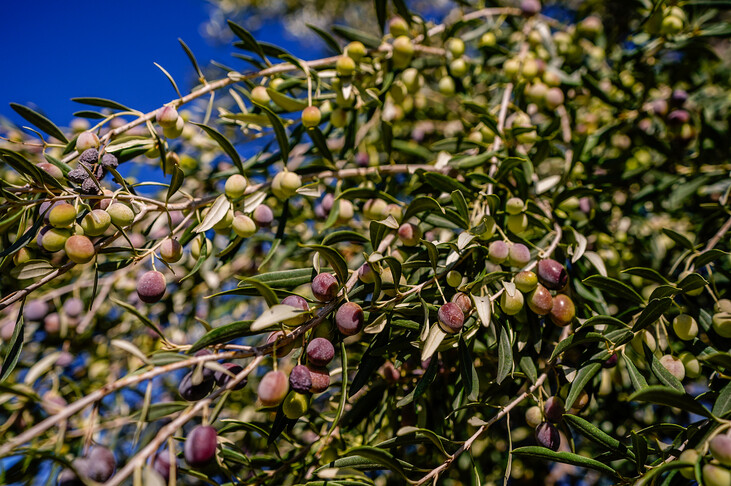
Tunisia anticipates the 2026-2027 olive harvest season amid fears of a production decline of about 40 percent compared to the previous season, due to climate and financial challenges. Meanwhile, the Central Bank has urged banks to double their efforts to finance farmers and exporters to ensure sufficient liquidity during harvesting and storage stages.
In the same context, agricultural policy expert Fawzi al-Zayani confirmed that achieving production ranging between 200,000 and 250,000 tons is a significant result. He pointed out that rain-fed olives are threatened with drying up due to heat, while summer electricity outages complicated the operation of irrigation pumps in irrigated areas.
For his part, Al-Mouldi al-Ramdhani, head of the Regional Federation of Agriculture in Kairouan, clarified that the Federation has raised issues concerning marginal lands and working conditions. He confirmed that olive oil prices are linked to the global market, while Tunisia has not yet announced its final estimates.
He noted that Spain is aiming for production of about 1.261 million tons. He emphasized that directing the majority of Tunisian production for export makes prices hostage to production levels in the world's leading producing countries.
The Tunisian Central Bank added in a memorandum addressed to financial institutions the necessity of providing liquidity to farmers, mill owners, and exporters to support productive sectors and drive investment within a sustainable strategy to meet the needs of different stages.
Al-Zayani confirmed his expectations of price increases due to local and global demand, warning against external attempts to devalue prices. He called on farmers to control the sale of their production to face the purchase of quantities at the lowest prices.
According to data from the National Institute of Statistics, the value of olive oil exports reached about 4 billion dinars by the end of September 2026, compared to 2.9 billion dinars in the same period in 2025, representing a growth of 37.4 percent.
Spain accounts for 31.9 percent of Tunisia's exports, followed by Italy with 19.8 percent, the United States with 19.3 percent, and Canada with 4.9 percent, according to statistics from the National Agricultural Observatory.
Source: Anadolu Agency
Comments (0)