

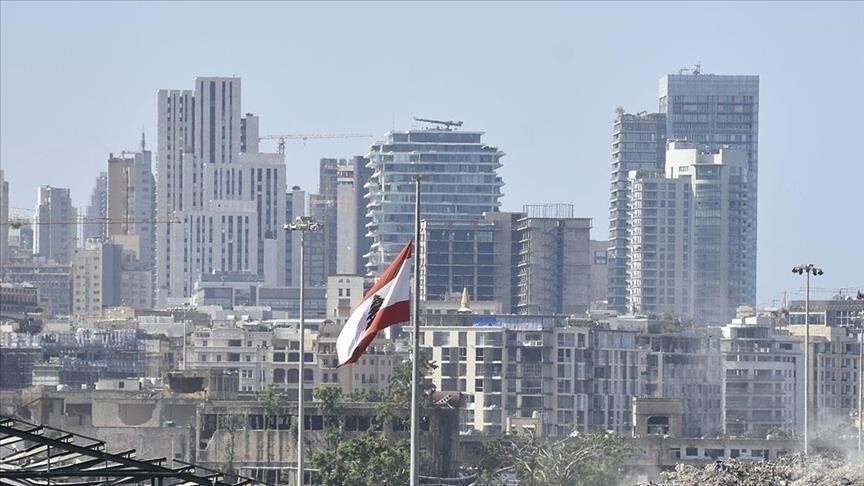
Two Lebanese experts believe that the 83rd anniversary of their country's independence from the French Mandate, which falls today, Sunday, comes as Israel continues to occupy parts of its southern territory and carry out attacks on it, and amid internal division over Hezbollah's weapons.
While researcher and historian Issam Khalifa believes that the continued presence of weapons outside the authority of the state gives Israel a pretext to continue its attacks, political writer Qassem Kassir criticizes the government's move toward restricting weapons to the state, calling for rebuilding Lebanon's defensive capability to confront the Israeli occupation.
Occupation and absence of celebrations
These positions come as the Israeli army continues to occupy areas in southern Lebanon following an aggression that began on March 2 last, during which it advanced up to 10 kilometers deep into Lebanese territory and established what it called a "security zone" covering an estimated 600 square kilometers, equivalent to about 5.74 percent of the country's total area.
Independence Day, which falls on November 22 every year, arrives amid the absence of central official celebrations and military parades, in a scene that differs from the celebrations of the years before the successive political and security crises.
Since 2019, the Lebanese army's central military parade has been absent from downtown Beirut, after having been for decades one of the most prominent features of celebrating the country's independence from the French Mandate in 1943. The absence of military parades was initially linked to the popular protests the country witnessed and the severe economic crisis, then the coronavirus pandemic and the presidential vacuum between 2022 and 2024, and finally the current security and military circumstances.
On November 13 of this month, Lebanese President Joseph Aoun called for raising the flag on homes, institutions and schools between the 20th and 22nd of the same month, stressing in a statement at the time that "nations are not protected by slogans alone, but by respecting their symbols and working for them."
In a position reflecting the link between the occasion and the situation on the ground, Lebanese army commander Rodolphe Haykal affirmed on Thursday that restoring sovereignty over all Lebanese territory is a national priority, and that independence is not complete without liberating the land and extending state authority over all its territory. In a statement marking Independence Day, Haykal indicated that the continued Israeli occupation and its attacks hinder the army's efforts to complete its deployment in the south of the country, reiterating the need to restrict weapons to the state.
Issam Khalifa's position
Lebanese researcher and historian Issam Khalifa believes that independence is not limited to commemorating a historical event, but is tied to the state's ability to exercise its sovereignty over all its territory within its international borders. He told Anadolu that Lebanon today faces the Israeli war on one hand, and Iranian interference in Lebanese affairs on the other, which reflects the depth of the internal political crisis.
He pointed out that Israeli ambitions in Lebanese land and water are not new, citing "a memorandum submitted by the Zionist movement to the Paris Peace Conference in February 1919," which included a demand to annex the Litani River area in southern Lebanon, according to Khalifa. He added that these ambitions have recently extended to the resources of "gas and oil discovered in the eastern Mediterranean."
Khalifa warned that the continued Israeli occupation does not threaten Lebanon's sovereignty alone, but is linked, in his assessment, to plans to reconsider the borders of the countries of the region. He noted that the latest Israeli aggression destroyed more than 56 villages in southern Lebanon and forced their residents to flee the south, in addition to destroying border points and turning Lebanese land into what Israel calls a "security zone."
The framework agreement and Hezbollah's weapons
On June 26 last, Beirut and Tel Aviv signed a "framework formula" agreement under US sponsorship, which provides for a gradual Israeli withdrawal from Lebanese territory, the deployment of the Lebanese army there, and the disarmament of Hezbollah. However, Israel continues its near-daily attacks and violations while continuing to occupy areas in the south of the country, while Hezbollah rejects the agreement and refuses to discuss the issue of its weapons before the Israeli forces withdraw.
Khalifa does not separate the continuation of Israeli attacks from the internal division over weapons, as he believes that the existence of political and military forces linked to Iran in terms of weapons, money and politics gives Israel a pretext to continue its attacks and achieve its ambitions in Lebanon. He said the internal division is deepening, as the aggression continues, between "those who demand restricting weapons to the state and those who defend keeping Hezbollah's weapons," describing the party's situation as a "state within a state."
On August 5, 2025, the Lebanese government decided to restrict weapons to the state, including the weapons of Iran-backed Hezbollah, but the party has repeatedly announced its adherence to its weapons and demanded an end to Israeli attacks and withdrawal from the occupied territories.
In addition to the political and security situation, Khalifa pointed to other crises Lebanon suffers from, most notably the economic crisis, the collapse of the currency's value and depositors' failure to recover their money from banks, as well as educational and environmental crises, considering that they increase the dangers threatening the country. He said that confronting the dangers requires adhering to the unity of the people and the unity of Lebanese territory, saying: "We must resist all those who covet our land, our people and our state."
Qassem Kassir's position
For his part, political writer Qassem Kassir said that the arrival of the Independence anniversary amid the continued Israeli occupation and attacks and the violation of Lebanese sovereignty calls for a new vision to confront the Israeli occupation, the drawing up of a national defense strategy, and the rebuilding of a defensive force for Lebanon.
He told Anadolu that "the return of the Israeli occupation over the past three years represents a dangerous indicator," amid internal crises and regional and international shifts.
Kassir criticized the government's move toward restricting weapons to the state, considering that the continued Israeli occupation calls for giving priority to rebuilding Lebanon's defensive force. He said: "Instead of taking a decision to re-form a defense force for Lebanon, decisions are being taken to restrict weapons exclusively and pressure the resistance (Hezbollah) and confiscate its weapons."
He said that what he described as "the failure of direct negotiations with Israel" calls for a "critical review" of the policies followed, and the adoption of a "new vision at the official and popular levels to confront Israeli attacks and restore true independence."
Direct negotiations between Lebanon and Israel began under US sponsorship on April 14, 2026, in the capital Washington, following the outbreak of the Israeli aggression on Lebanon on March 2 last.
Source: Anadolu Agency
Comments (0)