

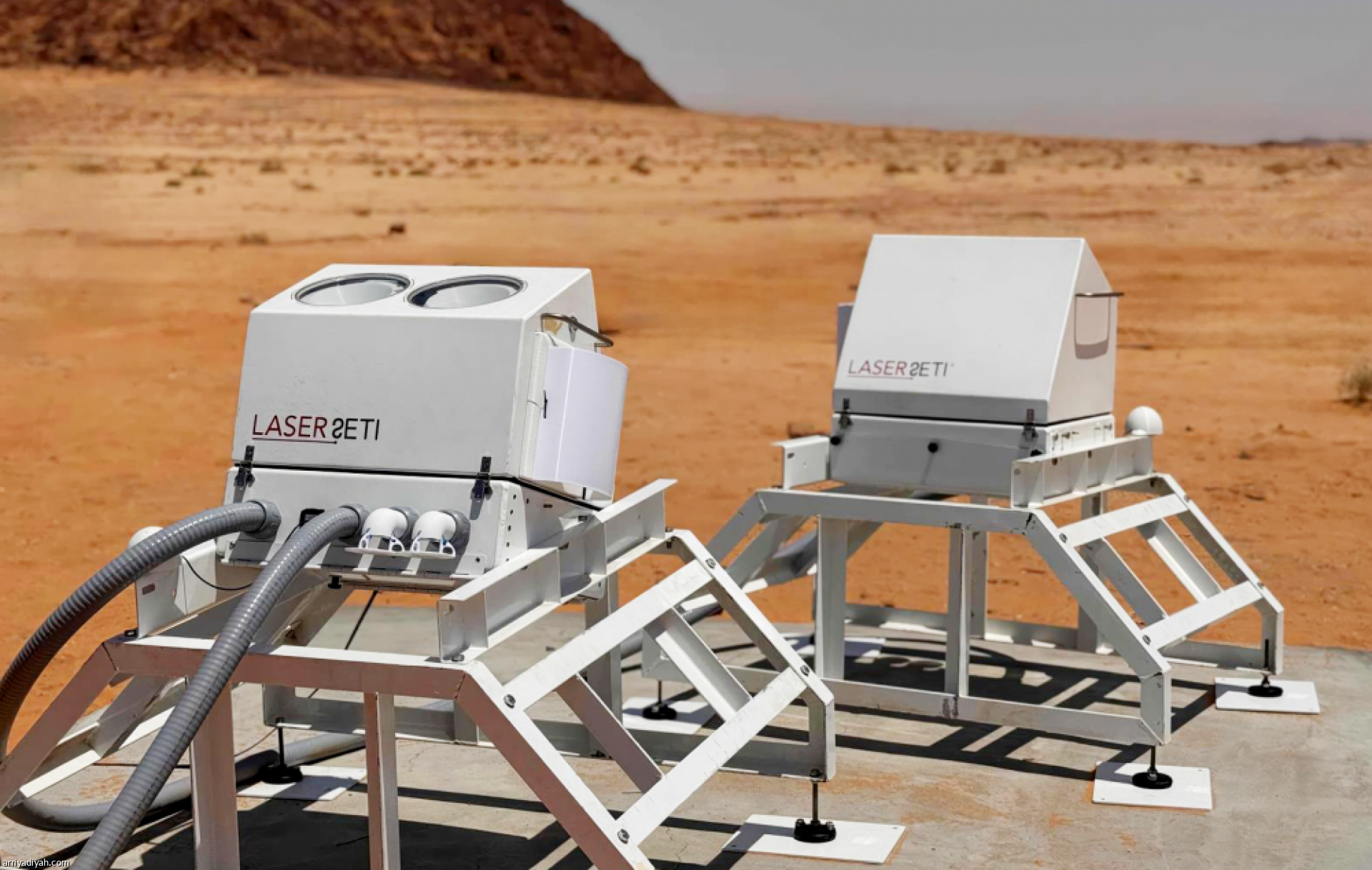
The Ula Royal Commission for AlUla Province announced the successful installation and operation of two stations belonging to the global "LaserSETI" project at the AlUla Beacon site, as part of its efforts to develop an integrated system for scientific research and astronomical discoveries. The two stations are operating at full capacity after completing the initial operational phase on August 19, 2026, continuously collecting astronomical observation data.
Expanding the Global Network
With the activation of the two stations, AlUla has become the first site in Asia and the fifth operational observatory within the network, alongside its existing sites in California, Hawaii, Arizona, and Puerto Rico. This technology contributes to providing observation data that can be compared across different locations, helping researchers study phenomena that are difficult to observe using a single site.
Scientific Project Objectives
The "LaserSETI" project is an international astronomical observation network relying on specialized stations to monitor the sky continuously, with the aim of discovering transient optical phenomena, which are distinct and rare light flashes or changes potentially linked to cosmic events or unusual celestial bodies, as well as detecting potential laser signals requiring further scientific study and analysis.
Partnership and Execution
This achievement is an extension of the cooperation agreement announced by the "Ula Royal Commission for AlUla Province" and the "SETI" Institute on August 8, 2024, which included supporting the development of the AlUla Beacon observatory and facilitating the installation of LaserSETI observation equipment. The operation of the two stations reflects the transition of this cooperation from the agreement and planning phase to actual implementation, highlighting the contribution of international scientific partnerships to developing astronomical research and observation capabilities.
Source: Arriyadiyah newspaper
Comments (0)